Your Questions About Axolotl’s Answer
-
An Axolotl is a fully aquatic salamander native to lakes in Mexico. Unlike most salamanders, axolotls remain in their juvenile aquatic form throughout their lives.
-
With proper care, axolotls commonly live 10–15 years.
-
They can be beginner-friendly if the owner is willing to learn aquarium cycling, water chemistry, and temperature management before adoption.
-
Usually no. Axolotls are solitary animals. Fish may nip their gills, and axolotls may eat smaller animals that could be dangerous for them. Most thrive best on their own or in some cases same sex - species-only tanks.
All About Tanks and Habitats
-
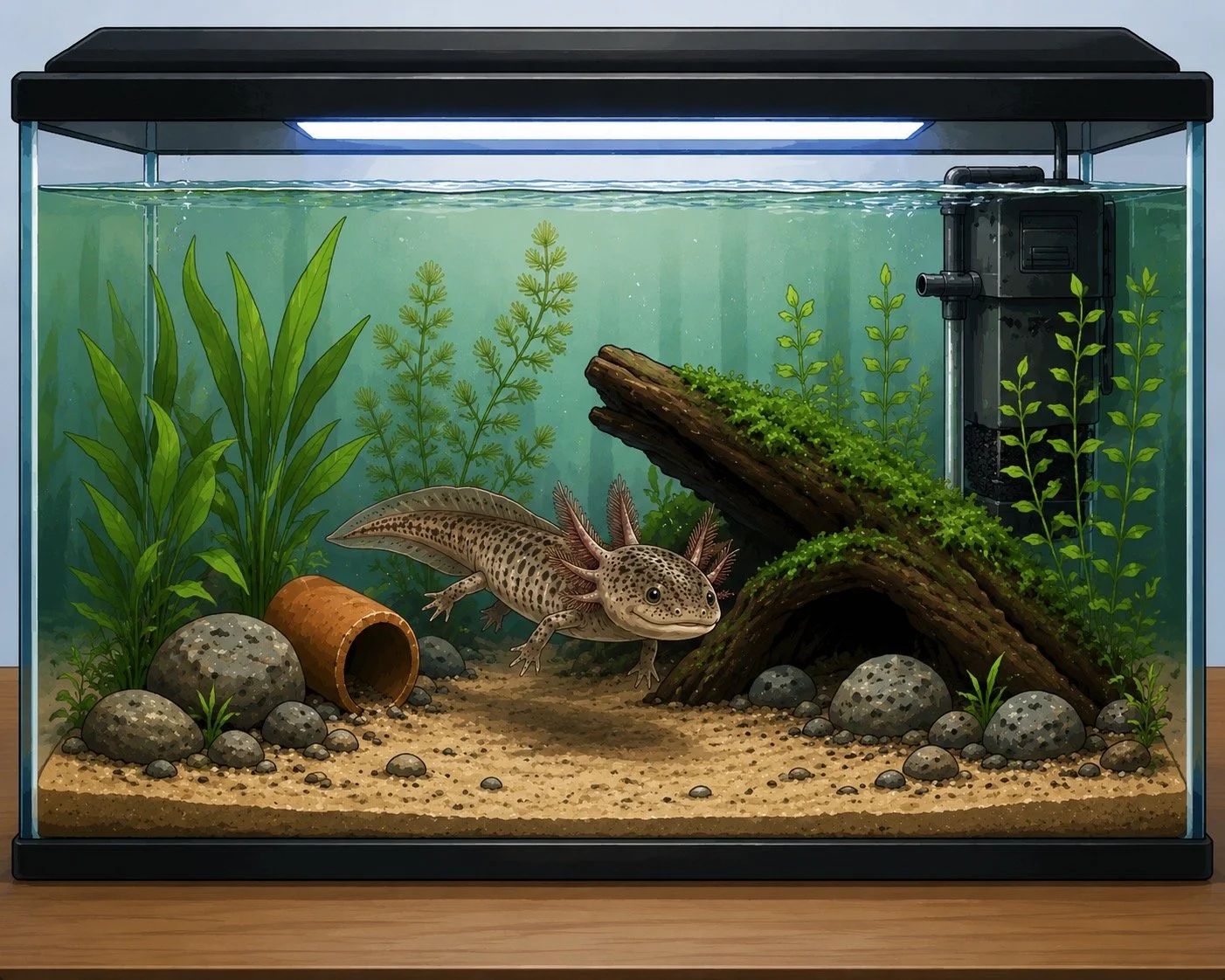
Most pet stores or breeders will say a single adult axolotl should typically have at least a 20-gallon long aquarium. However in my experience once full grown I would say at least a 40-gallon breeder is better. Axolotl’s also prefer length versus the height of an aquarium.
-
Ideal water temperatures are usually 60–68°F (16–20°C). Temperatures above this range can cause stress and illness.
-
Yes! Cycling establishes beneficial bacteria that convert toxic ammonia into safer compounds. If you want to be a responsible owner this is a critical step.
-
Bare-bottom tanks are the safest for juveniles. Tile or fine sand are safest for adults. Gravel and small rocks can cause fatal impaction and should be completely avoided. Some research will also recommend using undyed or natural colour sand - NOT black.
-
All Things Food Related
-
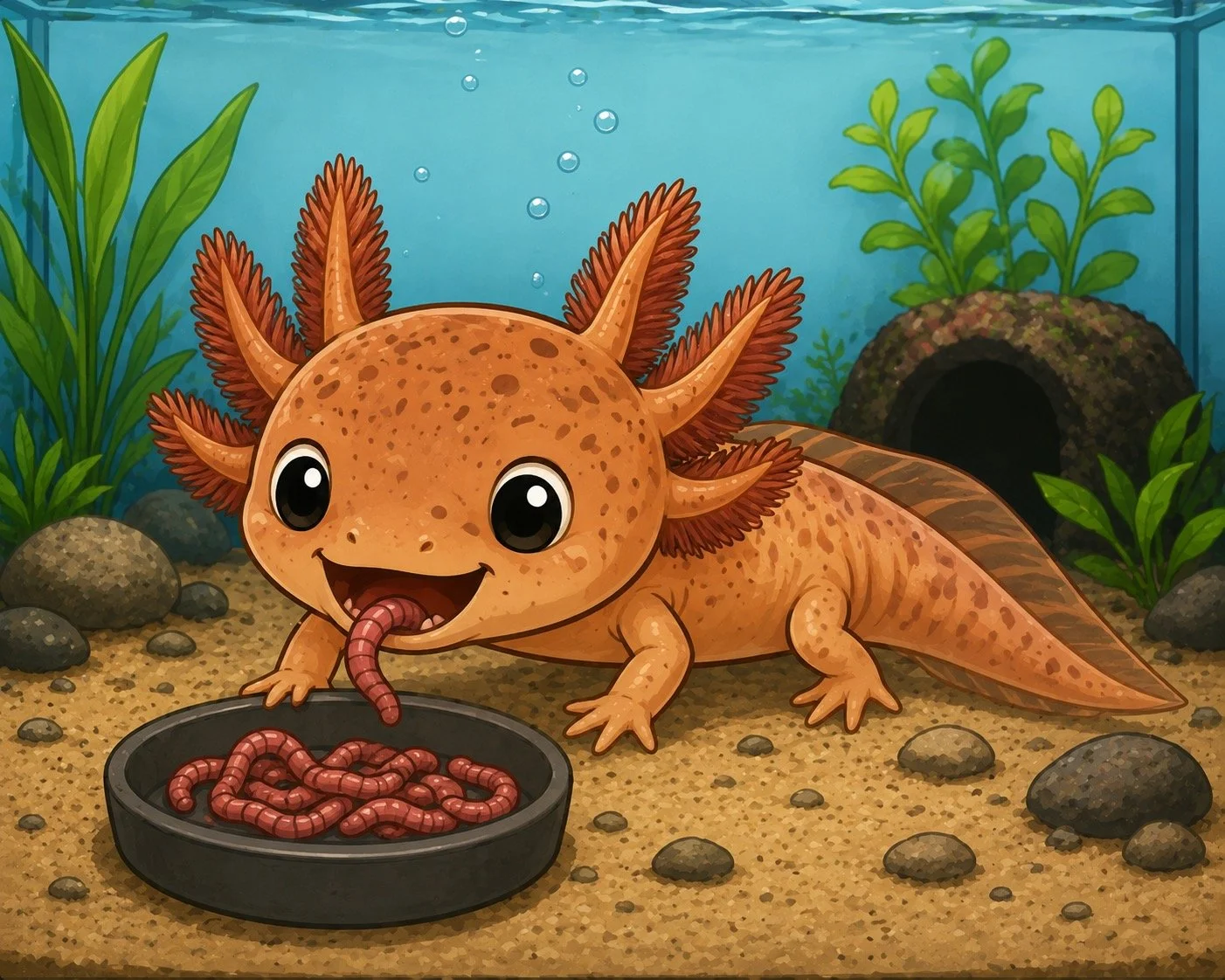
Axolotl diets will evolve as they age. Typically juveniles will eat bloodworms or brine shrimp. As they age they will transition to red wriggler worms, night crawlers, high protein axolotl pellets and repashy grub pie. A proper diet will include a variety of different food.
-
-
Age matters. Extremely young juveniles can eat 2-3 times a day, however as they age they will start to eat once daily. Adults are often fed every 2–3 days.
-
Again this question depends on who you ask. Feeder fish like guppies can occasionally be a great snack, however they are generally discouraged because they may introduce parasites or injure your axolotl. Younger fry that have been properly quarantined can be a great option.
Happy and Healthy Gills
-
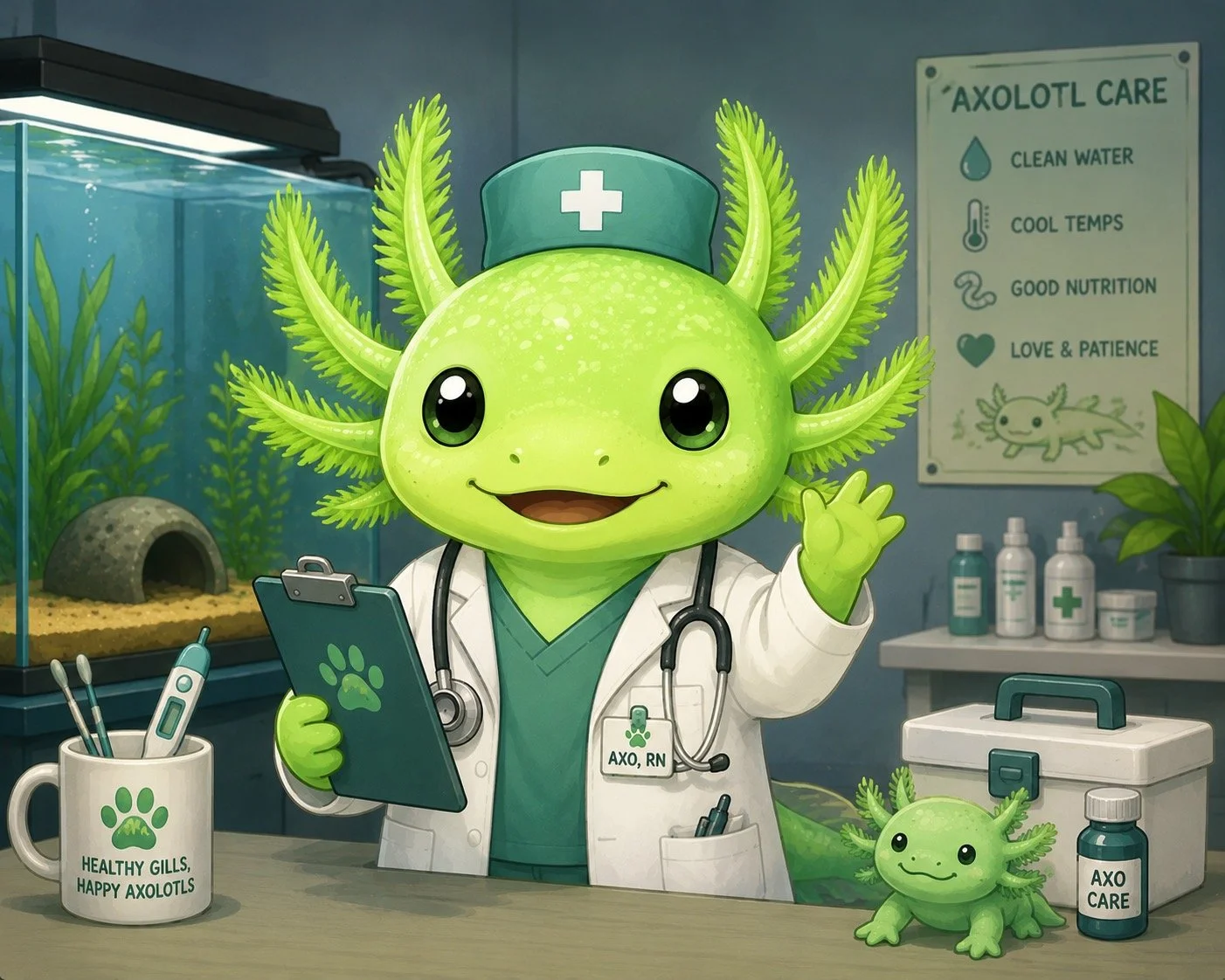
Know how to read your axolotl. Each has unique personalities but the most common signs include:
Curled gills
Forward-curled tail tip
Loss of appetite
Floating issues
Frequent surface swimming
I always recommend testing your water parameters if you feel like something might be off with their behaviour.
-
Some common issues include fungal infections, impaction, ammonia burns, and heat stress.
-
NO! Trust me, I often find myself wanting to pet, pick up or nose bop these adorable creatures, however handling them is a no. Their bodies are extremely delicate, sensitive and not designed for human touch. Unlike dogs or cats, axolotls do not enjoy being held and can experience high levels of stress, which can lead to illnesses.
-
My biggest piece of advice is avoid “Dr. Google” and use internet forms with a grain of salt. Exotic vets exist for a reason and yes, many do care for axolotl’s. Some internet remedies can be dangerous when done without proper veterinary guidance.
Rehoming and Adoption with YYC Axolotl Sanctuary
-
There are lots of reasons why someone might be looking to rehome their axolotl.
Underestimating care requirements
Tank maintenance challenges
Moving or relocating to areas that have restrictions or where they may be illegal to own
Purchased for a child
Unexpected costs or a change in their owners ability to care for them.
-
Make sure you are informed about how to properly are for them and ask the current owner or rescue a lot of question. Sometimes a lot might not be known about them it is still important to ask about:
Age
Diet
Water parameters
Medical history
Temperament
Previous tank mates
-
-
-
No! We offer delivery and meet up options. We will not under any circumstance ship an axolotl to a potential new home.
Ethical Ownership
-
Yes, Wild Axolotl populations are critically endangered, largely due to habitat loss and pollution.
-
NO! Never! Absolutely Not!
-
Requirements vary by region. Some places restrict ownership or transport.
In Alberta as of 2026, it is legal to own an axolotl as a pet. Here are the key rules and considerations:
Current Alberta Provincial Regulations
No Permit Required: As of 2026, there is no provincial permit needed to own, breed, or sell axolotls in Alberta.
Importation: You can bring axolotls into Alberta from other provinces for personal pet use.
BE AWARE OF LOCAL BY-LAWs
While permitted provincially, individual municipalities may have by-laws regarding exotic pets.
In Calgary, for example, they are generally allowed, but rental agreements or condo boards may have specific rules prohibiting them.
-
Yes!
Axolotls are illegal to own as pets in British Columbia, New Brunswick, and Prince Edward Island. In Nova Scotia, they require a special permit, which is rarely granted to private individuals. These restrictions generally exist because axolotls are considered exotic wildlife that could harm local ecosystems if released.
FAQ’s You Should Ask Yourself Before Taking Ownership of an Axolotl
This is not your average FAQ page. You should ask yourself these questions before taking ownership of one of these amazing creatures
-
Chillers are essential equipment for axolotls because they are cold-water creatures that require consistent temperatures between 60–68°F (16–20°C) to remain healthy. Without a chiller, keeping an axolotl tank in this range is very difficult, especially during summer months.
Warmer water puts massive stress on axolotls, leading to a weakened immune system, increased susceptibility to diseases, and higher metabolism rates that can be fatal. Using frozen water bottles can be dangerous and creates fluctuating temperature swings.
Chillers also remove the need to constantly monitor temperatures and swap ice bottles, reducing stress for both the owner and the axolotl.
Fans can cool tanks through evaporation, they often lead to severe evaporation loss and high humidity in the room, unlike a dedicated chiller.
-
If the answer is no, then an axolotl is not for you. Continue to love them and be an advocate for responsible ownership.
-
Understanding the nitrogen cycle is the most critical hurdle for potential axolotl owners because these animals produce a massive "bioload" (waste) and are extremely sensitive to the toxins that waste produces. In a closed aquarium, without a "cycled" filter, axolotls are essentially forced to live in their own toxic waste, which can lead to chemical burns, gill loss, and death.
-
Water testing time frames will change throughout the lifespan of your tank. If you are not prepared to do proper testing (my recommendation is to avoid strips), than you are setting yourself up for real issues.
When Cycling (New Tank without an axolotl present) you need to check every 24 to 48 hours. You must monitor ammonia and nitrite daily once they appear to ensure levels don't spike so high they stall the beneficial bacteria growth.
For Newly Established Tanks be prepared to test daily or every other day once you have added your axolotl. This will last for about 2–4 weeks. This confirms your biological filter is actually handling the axolotl's heavy waste load.
For Stable, Established Tanks, testing weekly, ideally just before your scheduled water change. This helps you track nitrate buildup and determines exactly how much water you need to change to keep nitrates below 20ppm
In Emergency Situations you will test immediately if your axolotl shows signs of stress, such as curled gills, a hooked tail, or lethargy.
-
Access to an exotic vet is critical because axolotls are complex amphibians with unique biological needs that a general vet are not typically trained or equipped to handle.
While axolotls do not have a "mandatory" vaccination schedule like dogs or cats, it is highly recommended that they see a specialized vet once a year for a routine health check.